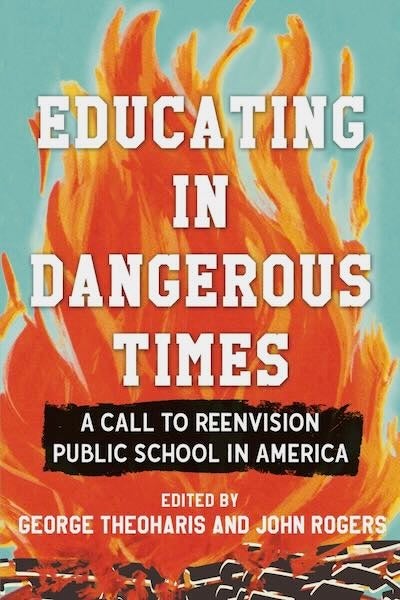
Educating in Dangerous Times: A Call to Reenvision Public School in America
Q&A with author John Rogers and Book Excerpt
by John McDonald
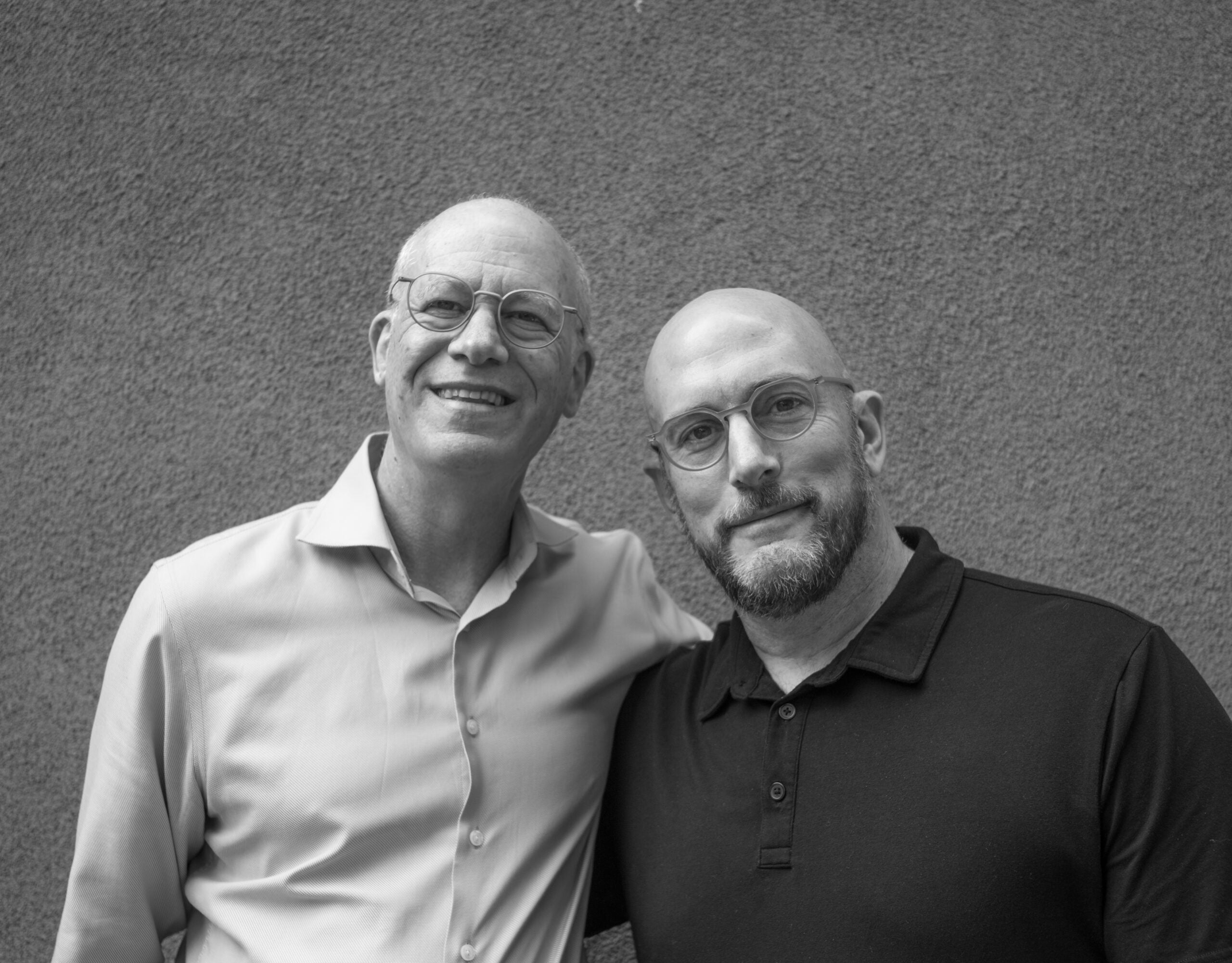
UCLA Professor of Education John Rogers has joined with George Theoharis, a professor of education leadership and inclusive education at Syracuse University, to co-author Educating in Dangerous Times: A Call to Reenvision Public School in America, a new book aiming to spark a bold public conversation about K12 schooling.
Published in August 2026 by Beacon Press, the book gathers a collection of essays by leading education scholars such as Michelle Young, Muhammad Khalifa, Judy Alston, Julian Vasquez Heilig, Antero Garcia, Vincent Cho, Shirin Vossoughi, Pedro Noguera, Charles Payne, Megan Franke and others who share their insights and ideas and join in a collective call to transform public education in America. In doing so the book shines a light on the threats of our highly charged political moment to our public schools and sets forth a vision of what schools should and can be.
“Sixty years ago, in very dangerous times, the writer and civil rights leader James Baldwin called upon teachers to rethink the purpose of education,” says Rogers. “The time has come for all of us to heed that call again. We need to ask how we can reenvision public schools and come together to create the public schools we need. We must ask, what can we do now?”
We talk with Professor Rogers about this important new book here. An excerpt of the book’s first chapter, edited for length, is also included.
Ed&IS: Why did you write this book now?
Professor Rogers: Public education has always faced a clash between the ideals of equality, opportunity and inclusion, and belief systems that embrace inequality, racial oppression, and supremacy. The latter set of beliefs justify excluding some students from full participation in meaningful education, and limit students’ opportunities to explore challenging but essential questions about the past, the present, and our possible futures.
This clash of ideas means that public education has always operated under a certain degree of threat. Our sense is that these threats have deepened and grown particularly worrisome of late. This is a moment when we all need to think anew about what public schools do and what we want them to become.
Ed&IS: The title of the book is in part, “Educating in Dangerous Times.” Can you tell us more about the dangers facing schools?
Rogers: Our public schools today operate amidst rising authoritarianism that challenges the very ideals of multiracial democracy. There are new efforts to threaten, intimidate and censor the voices of educators and young people, to limit how and what schools teach, and to exclude, rather than include and affirm, students from different backgrounds. And, as if that were not enough, our schools face extraordinary threats from the changing climate and the unbridled expansion of Artificial Intelligence.
Ed&IS: If there is one thing you want people to understand about what the book says, what is it?
Rogers: Even in this moment, when schools are being attacked and educators and young people threatened and scapegoated, there is an opportunity to think beyond the present, to think about the work of public schooling in a fundamentally different way and come together to build the schools we need.
Ed&IS: How do you hope people will use the book?
Rogers: We hope the book will help readers understand the dangerous threats facing public schools, young people and American democracy at this moment, and help the broader public dream beyond those threats. We want the book to serve as a tool for building community and enabling people to have purposeful conversations about what they want their schools to become. Our hope is that the book will bring together educators and students and family and community members to dream of public schools that will create a better future for us all.
EXCERPT from the book: Chapter 1: The Purpose of Public Education In Dangerous Times
By John Rogers and George Theoharis
Let’s begin by saying that we are living through a very dangerous time. —James Baldwin, “A Talk to Teachers,” 1963
Six decades ago, James Baldwin called upon teachers to recognize the expansive effects of racism and rethink the purpose of education. Racism, Baldwin reasoned, produces immiseration, social pain, and “reservoirs of bitterness.” It also prompts efforts to justify oppression and dehumanization—leading to lies about history and silences about the present.
Baldwin suggested that too often education is complicit in this ideological project. “What societies really, ideally, want” from education, he reasoned, “Is a citizenry which will simply obey the rules of society.” But Baldwin noted that such education faces a fundamental paradox: A society that succeeds in creating an obedient public “is about to perish.” Looking out upon America in the early 1960s, James Baldwin saw a nation that not only was riven by inequality but also “menaced” by a lack of vision, an unwillingness to take up difficult issues, and an inability to think critically. If America was to change, Baldwin contended, education would need to foster the commitment and capacity to “look at the world,” “ask questions of the universe,” and take action “at no matter what risk.”
Today, once again, young people are growing up in very dangerous times. There are a host of new challenges that threaten our health, our capacity to manage technological change, and our ability to nourish and protect the land that sustains us all. These perils are compounded by growing assaults on civil liberties and on the norms and institutions of democratic governance.
Baldwin’s vision for education remains a powerful framework. Our critical moment calls for schools that encourage us to be curious, clear-eyed, caring, and courageous. But, even as the mission of public education is more important than ever, schools find themselves the target of attacks. They have been caught up in battles to reassert “order,” reproduce long standing power relationships, and reestablish racial, social, and gender hierarchies.
These dynamics are not entirely new. The struggle to create a public education system that serves the public good has always faced significant challenges. Public schooling arose in the United States with a rhetoric of equality, inclusion, and democracy alongside powerful forces that excluded, sorted, and controlled students in different ways.
The Civil Rights Movement created something of a break from this past. While its effects were complex, between the 1960s and the mid-1980s, grassroots mobilization and legal advocacy combined to make many US public school systems more racially inclusive and somewhat more equitable. Changes were more evident in the South, where federal oversight was strongest. A broad legal and policy emphasis on educational equity during this period also brought new attention and some additional protections and resources to students with disabilities, English-language learners, and girls and young women, who previously had been excluded from opportunities, in particular school athletics.
By the late 1980s, the legal and political climate began to shift from a focus on access and opportunity toward markets, competition, and high-stakes accountability. In recent decades, equity advocates have continued to advance their cause. But, for the most part, educational systems have been driven by a loose policy consensus that has aimed to increase standardized test scores by ratcheting up pressures on educators.
The effects of these efforts today vary widely across schools, with some dramatic stories of improvement and numerous instances of heightened stress. Many schools remain sites of gross inequality. And too few schools take up Baldwin’s call to foster questioning, far-ranging curiosity, and the impetus to act in the face of injustice.
The critically important and disappointingly imperfect project of public education has come under intense attack over the last few years. Against the backdrop of a rising tide of authoritarianism and white nationalism, a new and virulent strain of education politics has arisen. Highly coordinated and well-funded initiatives—what we term “conflict campaigns”—have challenged efforts to create equitable and inclusive public schools that prepare young people for our not-yet-realized multiracial democracy. These campaigns play on the politics of resentment, reaffirming racial and cultural hierarchies. They seek to tighten control over what is taught—challenging, for example, the ideal that schools should help young people understand the history and contemporary manifestations of racism. And these campaigns weaponize homophobia and transphobia to impose rules that undermine the sense of belonging and dignity of LGBTQ+ students.
The conflict campaigns have had wide-ranging impacts. Targets have included school board members, district and school leaders, teachers, and students. Compounding decades of questioning educators’ professional expertise and the information sources that they draw upon, the renewed campaigns have had a chilling effect on individual educators and have undercut their collective power. In many places, the campaigns have galvanized community members’ anger against public education as an institution, leading to policies that usurp local decision-making, diminish public funding, and/or privilege privatized alternatives. Taken as a whole, such actions challenge public education as an institution, as well as the public’s capacity to govern our schools and shape our collective future.
As if these conflict campaigns were not enough, the second administration of President Donald Trump has nationalized attacks on local public schools. Through executive orders, budgetary actions, and bellicose rhetoric, it has sought to limit, overturn, or outlaw diversity, equity, and inclusion initiatives; support for English-language learners; long-standing safeguards for immigrant students; efforts to address racially disparate discipline policies; civil rights data collection; protections for LGBTQ+ students; and funding and guidelines ensuring a free and appropriate public education for students with disabilities, among other actions. The Trump administration has empowered states to dramatically expand voucher initiatives, undercutting funding for traditional public schools. It has threatened to pull funds from cash-strapped districts that do not comply with their every whim. And the Trump administration has unleashed unfettered immigration enforcement efforts that have fomented fear and undermined learning in schools across the nation.
We believe these forces pose a grave threat to the well-being of young people and families, the institution of public education, and the possibility of a multiracial democracy. But we also believe that there are many educators, students, parents, and community leaders who desire and engage in ongoing struggles to realize more equitable, inclusive, and democratic schools— schools that affirm the value of each student, foster feelings of safety and be- longing, and encourage creativity, critical understanding, and commitment to social change.
Considering The Purpose of Public Education
Sixty years ago, in a very dangerous time, James Baldwin called upon teachers to rethink the purpose of education. The time has come for us to heed that call as well. To do so, we need help with naming and understanding the threats our public schools face. And we need to dream of schooling beyond those threats. This book aims to galvanize attention on the dangers facing our students and our schools and initiate public conversations around the question: How should we reenvision public schools and collectively create the public schools we need?
Reflecting collectively on the purpose of education is a civic and moral act. It encourages us to clarify our conception of power, our relationship with the past, and our assumptions about how to democratically effect change. This process is civic in the sense that it invites us to deliberate together about our beliefs and our dreams for the future. It is moral because the purpose of education touches on our deepest commitments. Considering the purpose of education entails grappling with our sense of what skills and understandings we value and what identities and ways of being we aim to foster. Such reflection prompts us to contemplate our beliefs about human potential and our obligations to one another and to the natural world.
Articulating a purpose of education pushes us to name and face threats that limit human flourishing, diminish social relations, undermine stewardship of the natural world, and restrict our ability to engage honestly and robustly with the past and bring about imagined futures.
And since reflecting on the purpose of education invites both dreams of a better future and a reckoning with the perils we face, it compels us to examine our own agency. Whenever we consider with full hearts and open eyes the purpose of education, we must ask: What can we do now? An initial response to this question begins with trying on and trying out different ideas—deepening our learning through study, dialogue, and inquiry.
Achieving This Purpose Requires Insight and Expertise
This book aims to catalyze broad-based dialogue and public engagement about the purpose of America’s public schools and how we can advance this vision in dangerous times. A great many people across the country care deeply about the education of our young people—students, parents, and family members; teachers and school leaders; community advocates, artists, labor leaders, and state officials—the list can and should go on. All need to be part of this conversation and the movement for change.
The chapters in this book are written by education scholars from across the country who teach, study, and write about learning, school leadership, and the politics of education. The authors have taught in public schools, led school communities, parented school children, volunteered in local schools, and participated in efforts to improve their public school system. The education scholars who are part of this book are diverse in many ways, embodying an array of racial, language, ability/disability, gender, sexual, religious, and other social identities. Their varied backgrounds and wide expertise position them to springboard public dialogue in this very dangerous time.
Changing The Things We Cannot Accept
We come to the book with the belief that collectively we can and must help schools change. While there is value in the mindfulness and therapeutic understanding of acceptance (e.g., acceptance in regard to interpersonal relationships), in the case of schooling, we can accept neither the rampant inequality in our schools nor the current attack to dismantle public education. We believe this book supports the urgent and hard work of understanding the threats facing K–12 education and moving beyond them to a reenvisioned public schooling.
James Baldwin’s insight—that we are now educating in a “very dangerous time”—offers a challenge for readers of this book. Baldwin calls it our “obligation” in such times to “examine society and try to change it.” We hope that you join with friends, neighbors, and colleagues near and far and embrace this collective obligation. We ask that you take up the book and then share and discuss, share and discuss, share and discuss. Use the ideas you find across the book to bring people together to chart a path forward. Let’s dive into the learning now. It’s a beautiful day for reenvisioning our public schools.
Excerpted from Educating in Dangerous Times: A Call to Reenvision Public School in America edited by George Theoharis and John Rogers (Beacon Press, 2026). Reprinted with permission from Beacon Press.