
Building Research Alongside the People It Serves: Julissa O. Muñiz’ Work with Incarcerated Youth
by John McDonald
Julisa Muñiz’s research on incarceration and its implications for education and the lives of young people is driven by personal experiences and rooted in community and collaboration
“I come to this work first and foremost as a sister, niece, cousin, and friend to people who have been and, in some cases, are still incarcerated. The first time I entered a correctional facility I was a child. I have always had an intimate and complex understanding of carcerality and its effects on families. Families, who like mine, who were grappling with poverty, violence, and varied forms of marginalization.”
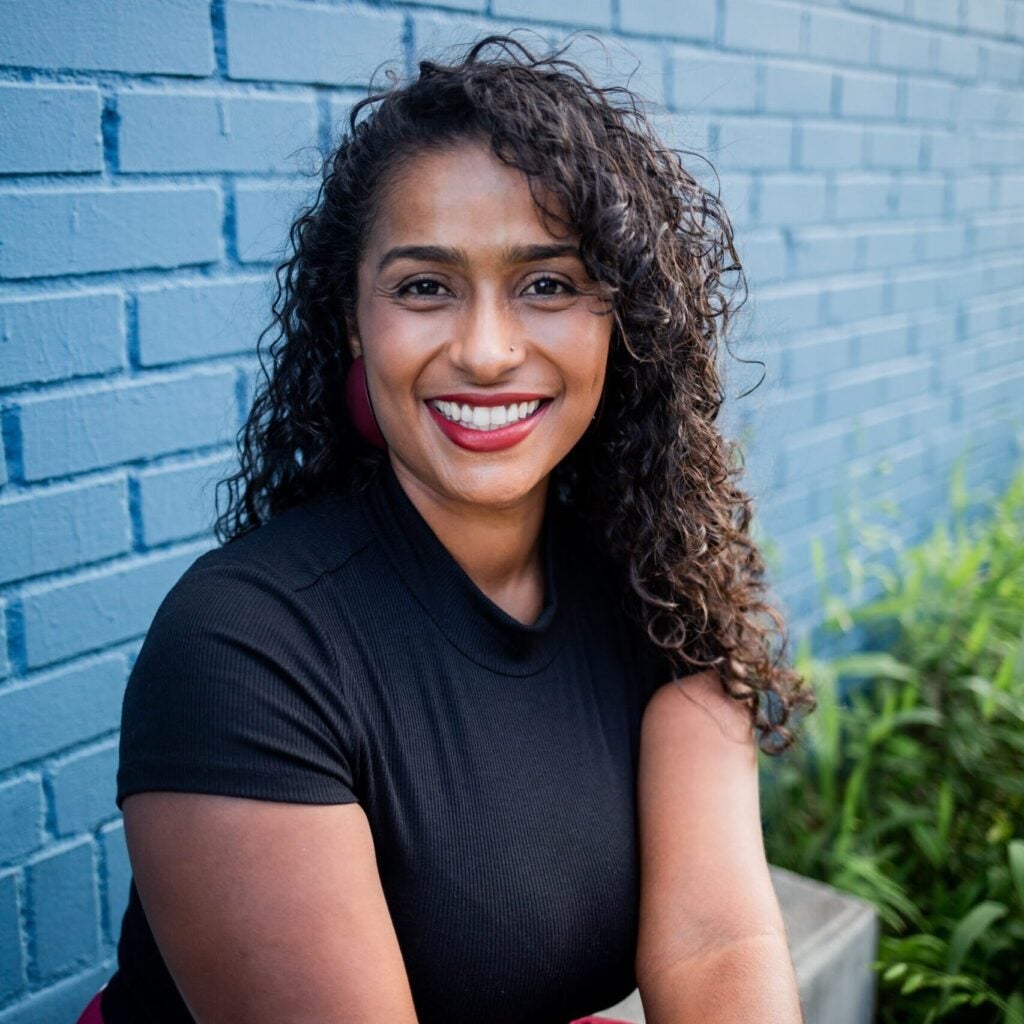
Those are the words of researcher Julissa O. Muñiz, writing in an earlier paper, “Learning from Within: Life-Affirming Practices and Third Spaces Created by and for Incarcerated Youth.”
These days, Muñiz is an assistant professor at the UCLA School of Education and Information Studies, intently focused on the exploration of incarceration and its impact on girls and women and in particular, Latina and Black women. As a scholar, she conducts research and shares what she has learned as a Black Latina educator, researcher, and abolitionist who works in carceral spaces alongside numerous youth, women, men, and gender-expansive people.
There should be little doubt that the work is personal to her. As she notes in “Learning from Within,” her “early life experiences and positionality as a Black Latina have profoundly shaped how I approach the work I do and my commitment to people’s liberation.”
“I think I see my family in a lot of these individuals who have been imprisoned. People in my family have had their own set of experiences with the criminal legal system, the immigration system, the juvenile legal system,” says Muñiz. “I can see the touch points within my own family of how carcerality can shape families and generations of families.
Muñiz’s work on issues of incarceration accelerated as an undergraduate at UC Berkeley interning with an organization called Legal Services for Prisoners with Children, where she supported several projects and collaborated closely with the California Coalition of Women Prisoners.
“I started doing work where I was being taught by all these community members about the issues of incarceration. I was working alongside people who were formerly incarcerated,” says Muñiz. “They would share their stories and teach me about the conditions for people inside and they taught me about abolition. Through them, I developed a love for this work. I learned also that the work has to be rooted in community.”
As the first person in her family to go to college, Muñiz says she didn’t even know what research was, but she applied to a summer research program at Berkeley. Her very first research project was focused on formerly incarcerated women, interviewing them about issues of power that exist in prisons.
Muñiz was hooked.
“At that point I was just starting to fall in love with the idea that I could read, write and teach for a living. Those are the things I already loved to do, those have been things I would have done for free, but now you’re telling me I could be a professor and never have to leave school? To me, that was incredible. Because of my own experiences, growing up in a low-income family, being a teen mom, school was a safe haven for me; it is what saved me from ending up in a whole different life. From there on, I wanted to be a professor. That became my goal.”
As Muñiz pursued her academic career, her interest and focus on issues on carcerality only increased. She spent time in institutions such as San Quentin State Prison and Central California Women’s Facility, as well as youth detention facilities across the country, listening, observing and interviewing those imprisoned in them. As you look across her work, you can see common themes and issues in her research.
In “Learning from Within,” Muñiz weaves the personal and professional together to share what she has learned as a Black Latina educator, researcher, and abolitionist, about how youth resist their dehumanization while incarcerated. Drawing on a series of interviews conducted over several years with Black and Latino boys incarcerated in a juvenile detention center in the Midwest, the research shows that even though they were incarcerated, young people found ways to create life-affirming third spaces and pathways for themselves.
“We saw how young people were not only surviving but creating third spaces that challenged their dehumanization. Having access to another identity and space within the carceral context helped them visualize a path forward where they could be a fuller version of themselves. When asked to describe themselves, youth did not start with negative labels. Instead, they emphasized positive attributes like ‘smart,’ ‘bright,’ ‘caring,’ ‘loving,’ and ‘compassionate,’ that when spoken brought a fuller, richer picture of who they were as people to light,” Muñiz writes.
That recognition of the humanity and talent of incarcerated youth and belief in and hope for something better for themselves can also be seen in a recent paper by Muñiz, “I Fell Right into the Stereotype: Carceral Figured Worlds and Latina Girls’ Identity Development,” published with co-author Armando Lizarraga at the University of Texas at Austin. The study explores the educational experiences of incarcerated Latina girls who were pushed out of public schools into alternative and juvenile court schools and how those experiences shaped their identities as students and learners, highlighting some of the educational challenges they face as well as the creative ways they learned to resist and reaffirm a more holistic sense of themselves.
Latina girls Muñiz writes, are often “criminalized and labeled as perpetrators of harm, as ‘fighters,’ ‘cholas,’ and ‘gangbangers,’ rather than as survivors who are coping with their abuse. The participants in our study challenge the labels that dehumanize and render them invisible. Instead, through creative, life-affirming practices, Latina girls humanize themselves as learners and uncover their hidden genius, parts of their identities that are often overlooked and devalued within public education and juvenile legal systems.”
In the paper, Muñiz illuminates the experiences and views of three Latina girls – “Desiree, Maria, and Kaelani*,” who were incarcerated in a juvenile facility in the Midwest and attending a court school program. (*The names of the girls used for the paper are pseudonyms).
The girls had all been suspended or expelled from their public middle schools and attended alternative schools prior to their arrests. All were gang-involved at the time of their arrest. All three were diagnosed with mental and/or emotional disorders, such as depression, anxiety, and post-traumatic stress disorder (PTSD). They all grew up in low-income households marked by unemployment/underemployment, food and housing insecurity, familial incarceration, and unsafe living conditions. All three girls shared stories of physical, emotional, and sexual abuse at the hands of family members, acquaintances, or institutional agents.
Muñiz’ research makes clear that the girls were highly aware the stereotypes of Mexican girls in the United States including labels such as “lowlifes,” “gang bangers,” and “teen moms,” and of how they were perceived by educators, school leaders, and community members. In interviews, they describe numerous interactions with adults, including teachers, in which they heard them use those labels to describe them or others like them.
“Maria” shared a story of a teacher who called her and others in the class, “lowlifes.”
“I wrote down [on] my paper, I see myself going to college, you know, doing good, good career, good man, everything. She told me, ‘Maria, kids like you do not belong, you know.’ She’s like, ‘You guys are all lowlifes, people like you guys shouldn’t even have a chance to come to school.’ Like, ever since she said that that kind of stuck to my head you know because she wasn’t the first person.”
At the time Maria was 11 years old.
And in an interview which would spark the title of the paper, “Desiree” also explained that she felt that she had fallen “right into the stereotype.”
“I fell right into what people see me as. Because when people look at me they think, that little girl’s mom and dad are gangbangers. They’re Mexican and Black. They’re always fighting, so this little girl’s going to grow up to be just like her mom. A mom at 14, this and that, this and that. And I would always tell people, ‘Nope, that’s not going to be me.’ But I feel like being here… my mom was here when she was younger.”
Desiree’s experiences in school also shaped her views that most of her teachers had low expectations of her. She disliked the comparisons people would make between her life and her mother’s history with incarceration, teen pregnancy, and gang involvement. Her social interactions in school made her feel “dumb” and that she was better off as the “class clown,” rather than admitting she “couldn’t do the work.”
The girls in the study expressed a genuine desire to learn, yet the spaces they were pushed into did not prioritize learning. Their experiences illuminate the challenges Latina girls experienced in attending disciplinary alternative schools, where learning was not a priority, contributing to how they saw themselves as students and learners. The findings offer insight in the educational approach and practices of alternative schools, demonstrating that once enrolled in alternative schools, each of the girls encountered poor learning conditions riddled with mundane and repetitive curriculum, harsher forms of surveillance, and disengaged educators who made them feel as though they did not care about their education.
Somewhat ironically, it was while they were incarcerated and attending a court school – the Promise Academy – that the girls began to have educational experiences that gave the girls the confidence to try a different approach to learning.
“I get school done here and I don’t have to watch my back,” Maria said.
In the study, Muñiz notes that when permitted to reengage in formal schooling in an environment where she felt relatively “safe” and did not have to “watch her back,” Maria took full advantage of the opportunity and began to thrive academically. Muñiz’ research documents Maria’s increasing participation in class, including asking questions, volunteering to read, offering to help others, and her uninhibited excitement about the beans she had grown as part of the farm-to-table science course she was taking.
Access to an actual teacher was by far the most cited benefit of attending Promise Academy, according to the girls, something they did not have access to in their previous schools. All the girls noted the importance of having “caring” teachers and how it shaped their perceptions of schooling.
“Here, they [teachers] see you struggling,” Kelani said, “and they actually come up to you and ask you if you need the help. It just feels good to have that type of teacher who supports you, I guess.”
For Desiree, being a part of a world where adults asked questions gave her the assurance she needed to ask for help. In doing so, Muñiz writes, “Desiree seemed to be (re)authoring a new and more confident self as a learner with more agency and power over her learning.”
However, Muñiz notes that “this is not to suggest that juvenile court schools are somehow ideal learning environments, because they are not.” Incarcerating youth so that they can attend school, is “never the answer.” Instead, the focus should be on improving learning conditions in public and alternative schools rather than improving juvenile court schools. The goal should instead be to abolish juvenile detention centers, making juvenile court schools obsolete.
Importantly, Muñiz underscores that even though Maria, Desiree, and Kaelani had each experienced exclusion, neglect, and violence in school, they all wanted to go back to school and one day attend college. While all three girls expressed self-doubt and fear for what their lives would look like once they were released, in many ways, they had each started to (re)author new agentic selves while still in custody. Despite the challenges they faced, they all shared visions of themselves as young women who would one day be free, educated, successful, and mothers dedicated to loving their future children.
Muñiz’ focus on the educational experiences of young people who have been incarcerated, her belief in their talent and potential, and the implications for educational and carceral systems, can also been seen in other works by her, including “Raising the bar: Dignity affirming approaches to teaching and learning in juvenile court schools, and “Fostering accountability, practices, and policies to serve system-impacted young people across the carceral continuum: Translating research to action.”
She also recently collaborated with Tyrone Howard, Pritzker Family Endowed Chair in Education to Strengthen Children & Families at the UCLA School of Education and Information Studies, sharing here research on the educational experiences of incarcerated youth in the publication, “Disrupting Education Systems of Injustice to Unlock the Hidden Geniuses.”
“Julissa is an amazing scholar and researcher who is deeply committed to justice for incarcerated youth,” Professor Howard says.
“Her insight and sense of empathy and compassion set her apart from most researchers in that she is driven by a sense of purpose that is rooted in seeing, hearing and honoring the humanity and possibility in young people in carceral systems. She not only finds the hidden geniuses in young people, but she rigorously and boldly calls out the structures and systems that seek to dehumanize them.”
Muñiz’s research is also fueled by her community focused and collaborative approach to her work. “Early on, I learned that to do human-centered research in a carceral environment means putting young people’s lives and needs first, even if at times it ‘interfered’ with the proposed research timeline,” says Muñiz. “For those of us who simultaneously identify as researchers and abolitionists, the reality is that conducting research in carceral spaces requires that we attend to the material lives of those inside because there is no such thing as business as usual.”
“I love research that is done in community with people. I think the strongest work is done with community,” Muñiz says. “It is the only way I know how to do research. I truly believe in the power of doing work with people. I am very intentional about my relationships and how I build them with people. I continue to trust that as my path. That is my way of being as a researcher. The Academy can be a rather lonely place, so being able to do work in collaboration with people feeds me in a very different way than if it was just me and a data set.”
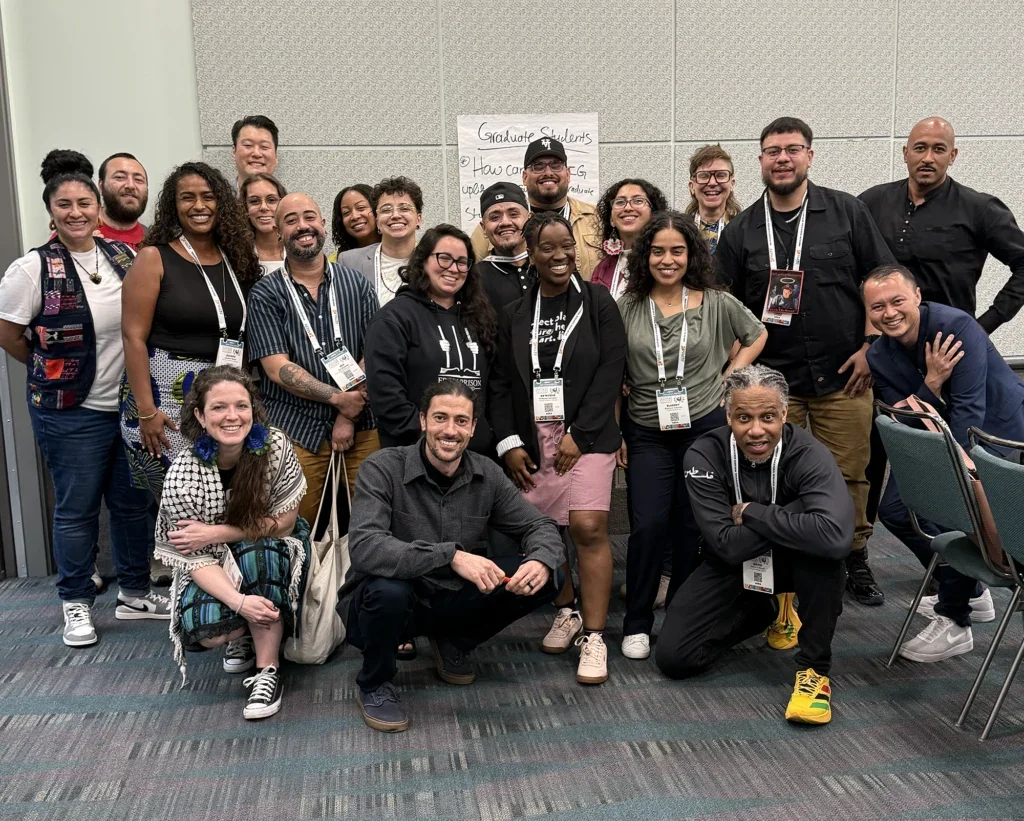
One prominent example of collaboration by Muñiz with her colleagues can be seen in the arduous task of establishing a new Special Interest Group (SIG) within the American Education Research Association (AERA) approved in February 2025. The new Abolition and Carceral Studies in Education SIG will create a forum to center, support, and strengthen educational research that takes a critical approach to understanding and disrupting the intersections between schooling, learning, and the carceral state.
Additionally, the SIG encourages and promotes research focused on abolition as a theoretical and analytic framework, vision, and approach to educational research in an effort to nurture a collective focus towards abolition and collective liberation in education.
“I would say the SIG is my baby, but it was certainly a massive undertaking. Last summer, after talking over the years with friends and colleagues about the idea, I reached out to AERA to learn what would it take to start a new SIG. They sent me a proposal and there’s so much you have to do. For example, one of the steps is you have to contact any other SIG that you might overlap with and get them to say that they have no issue with you forming a new SIG.
“I was like, ‘Oh, my God, this, this is not something I can take on by myself, I don’t have the capacity. My daughter is about to go to college, I’m about to move to L.A. – like, there’s all these moving parts.
“But what I do have are so many strong relationships in the field with people who are doing critical carceral studies work. So, we pulled a group together for a Zoom meeting and we divvied it up the proposal into different sections. And over the next two months, we met as a team and got it done. It’s been beautiful to be able to think and work with this incredible group of folks.”
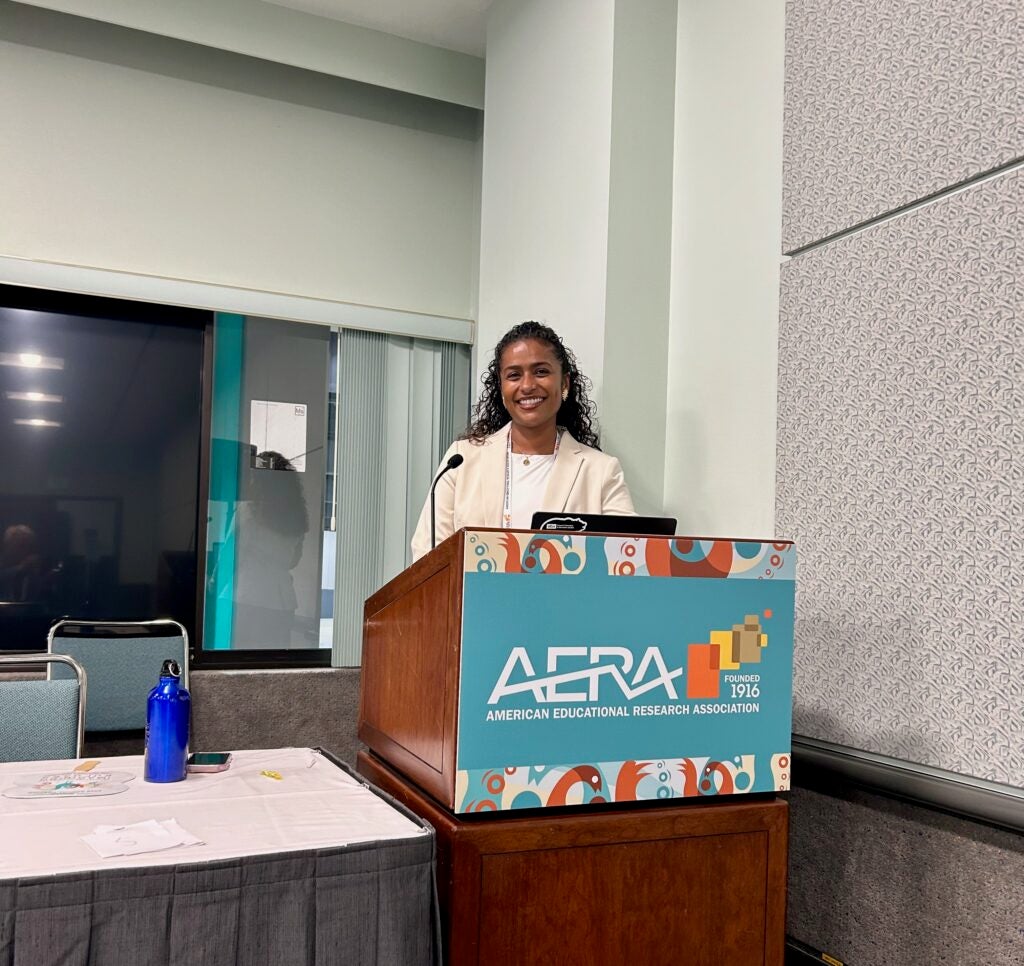
Muñiz was elected to serve as the first chair of the new SIG and they hosted their first official business meeting this past spring at the AERA meeting in Los Angeles.
At AERA, Muñiz gathered with many of her colleagues in the critical carceral field to preview a new research paper “Babe, I finally feel proud of myself: Formerly Incarcerated Latinas and their Postsecondary Educational Pursuits,” during a symposium on research at the intersection of education, carcerality, and abolition.
“California is the leading jailer of women in the world,” Muñiz told those gathered for the session. “We continue to see gender disparities, the continuation of gender-based violence across institutions, not just carceral institutions but also in higher education, that reinforce and exacerbate the disparities connected to women’s access and opportunity… we need to think more about what are we creating and being responsive to the needs and supports that women and gender expansive folks need to thrive.”
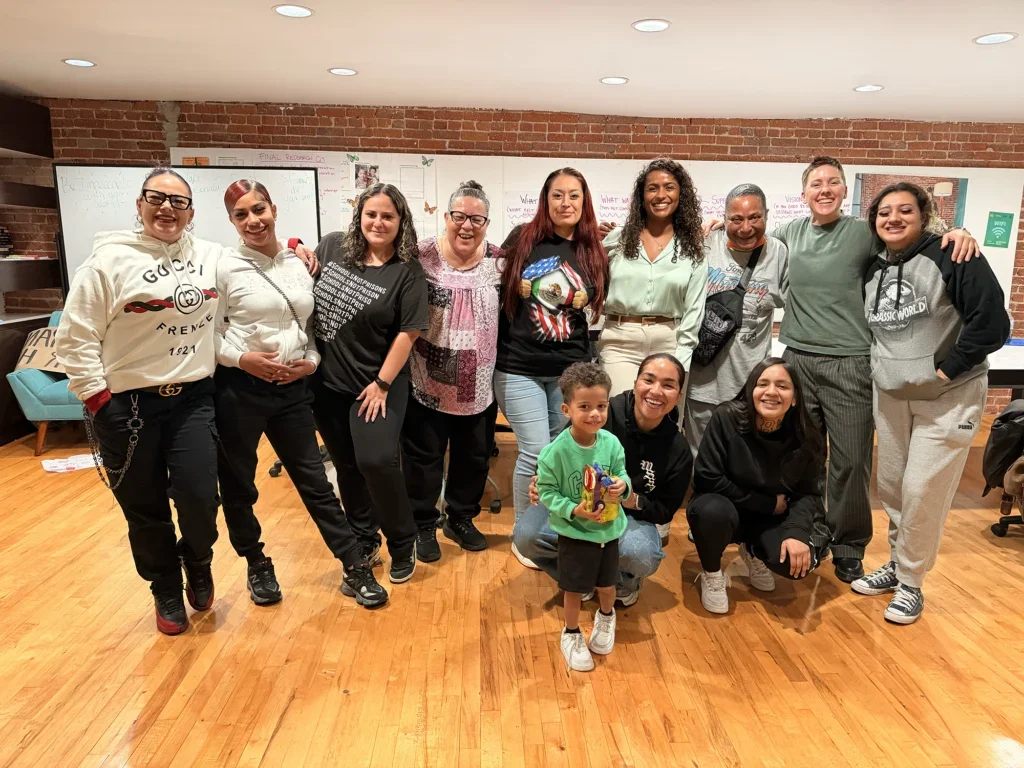
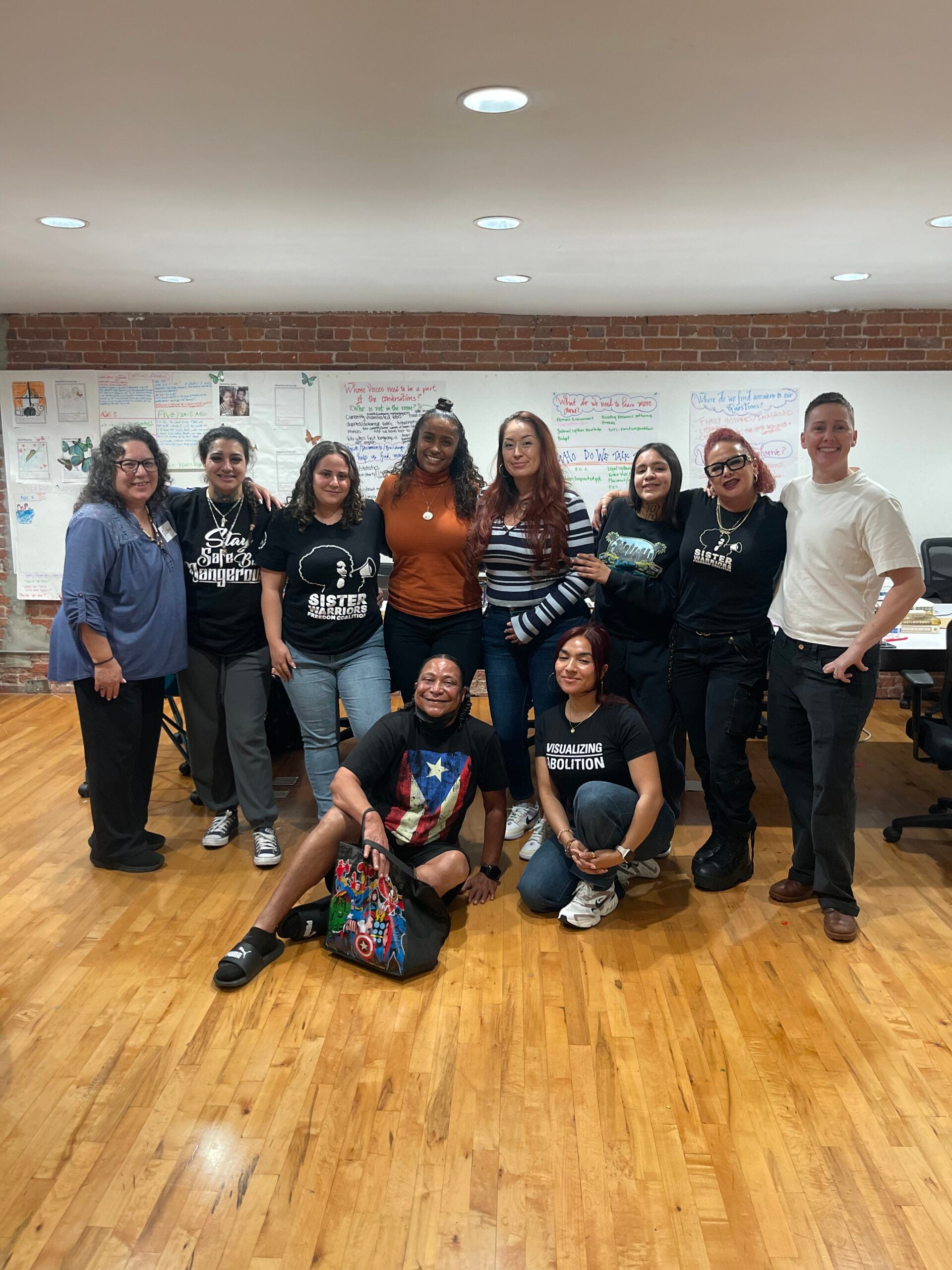
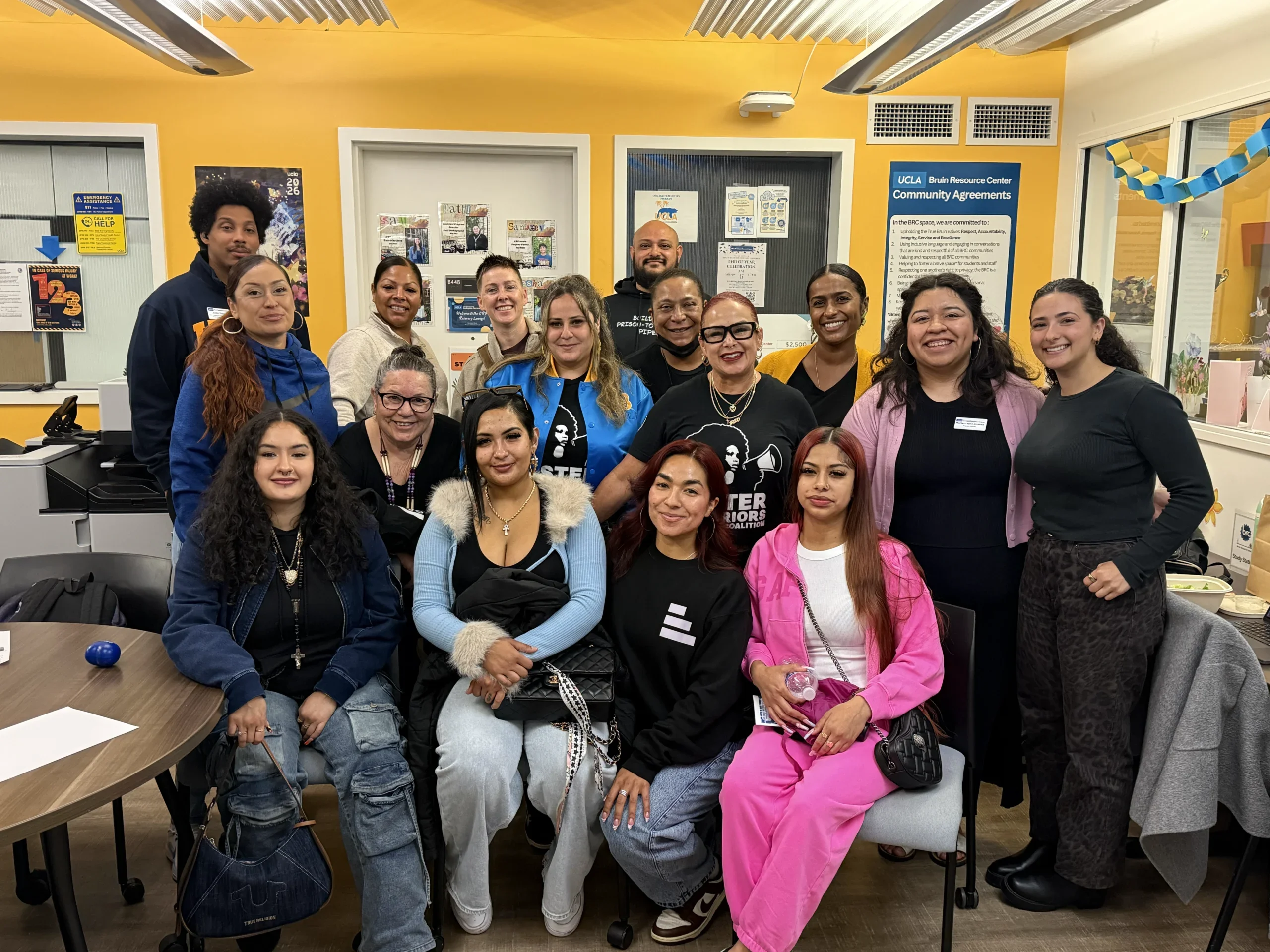
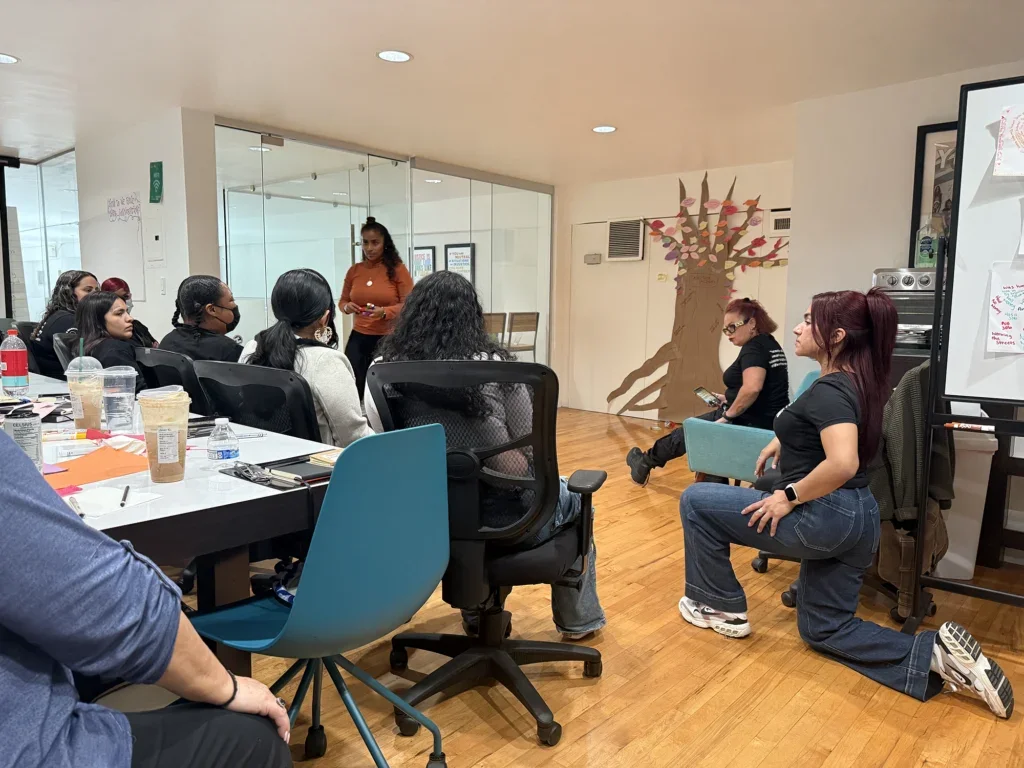
Muñiz is also engaged in a new collaboration with the Young Women’s Freedom Center and the Sister Warriors Freedom Coalition. She is partnering in a participatory action research project with a group of girls and women who are formerly incarcerated or impacted by carceral systems for a 10-week research focused program called the Freedom Research Training Institute. Working with Muñiz, the women have developed a Participation Action Research (PAR) project studying the impact of family separation by way of incarceration, immigration and the family policing system.
“We are literally training them on how to do research,” Muñiz says. “It has been a dream of mine to figure out how to put the tools and skills back into the hands of the people who know the problem the closest. It has been beautiful to see them of come into their own and claim their identity as researchers.”
As she looks forward at her career Muñiz says, “My agenda is still the same. It’s how do we continue to expand and create learning opportunities for people who have histories of incarceration, whether they’re incarcerated or whether they’re in our community. I feel like I have the training, but also the life experience to see that what we’re doing isn’t working. “My job, my responsibility is to bring visibility to this endemic issue in the U.S. and uplift the beautiful ways that people who are or have been incarcerated already sustaining themselves. I feel our responsibility as a public institution should be to serve communities broadly, not just those that are we consider desirable, including people who are formerly incarcerated. The reality is we have a responsibility to still teach and learn in those spaces.”